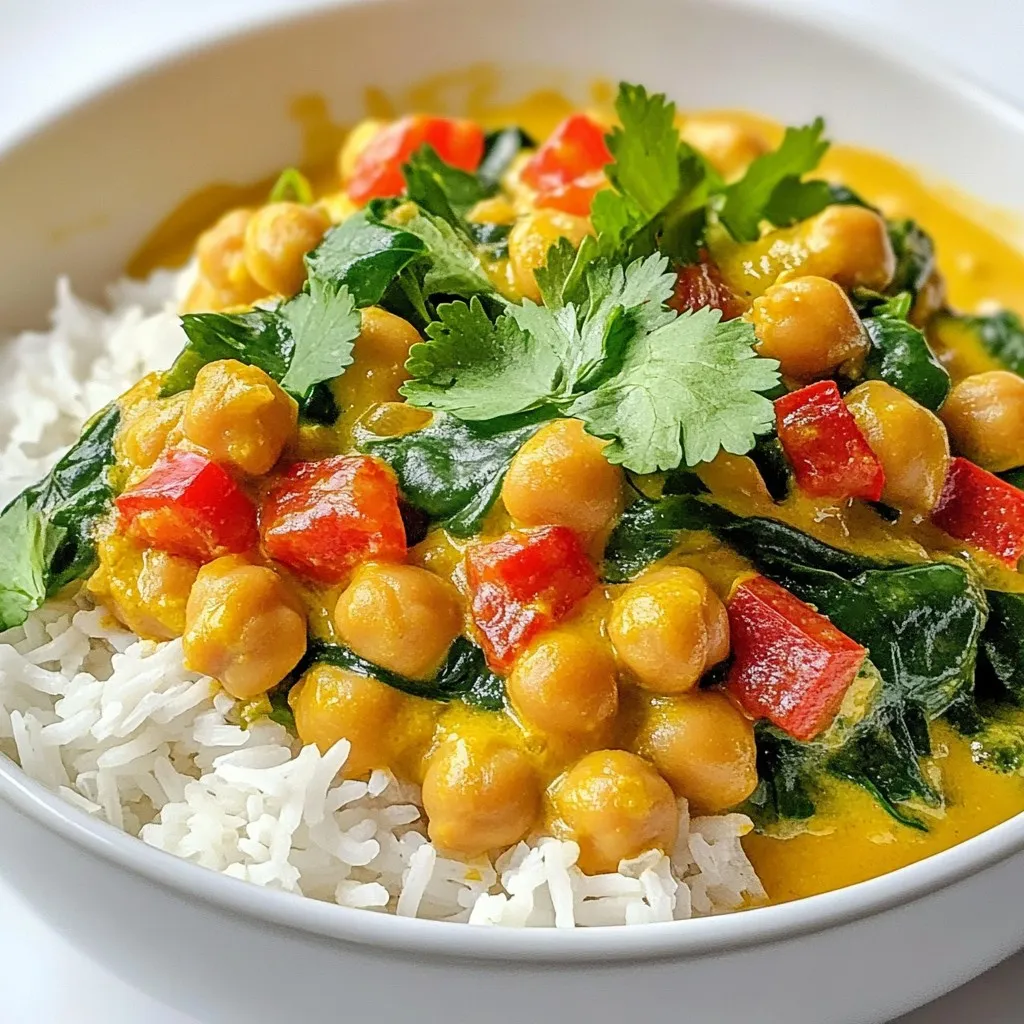
Are you ready to enjoy a delicious and healthy meal? Chickpea Coconut Curry is packed with flavor and nutrients. You only need a few simple ingredients, like canned chickpeas and coconut milk, to whip up this dish. With spices like curry powder and cumin, you’ll create warm aromas that fill your kitchen. Let’s dive into this easy recipe and make a meal that’s both tasty and nourishing!
Why I Love This Recipe
- Easy to Make: This chickpea coconut curry comes together in just 30 minutes, making it a perfect weeknight dinner option.
- Healthy Ingredients: Packed with protein from chickpeas and nutrients from spinach, this dish is both filling and nutritious.
- Rich Flavor: The combination of coconut milk and spices creates a creamy, aromatic sauce that’s hard to resist.
- Versatile: Enjoy it over rice or quinoa, and feel free to add your favorite veggies or adjust the spices to suit your taste.
Ingredients
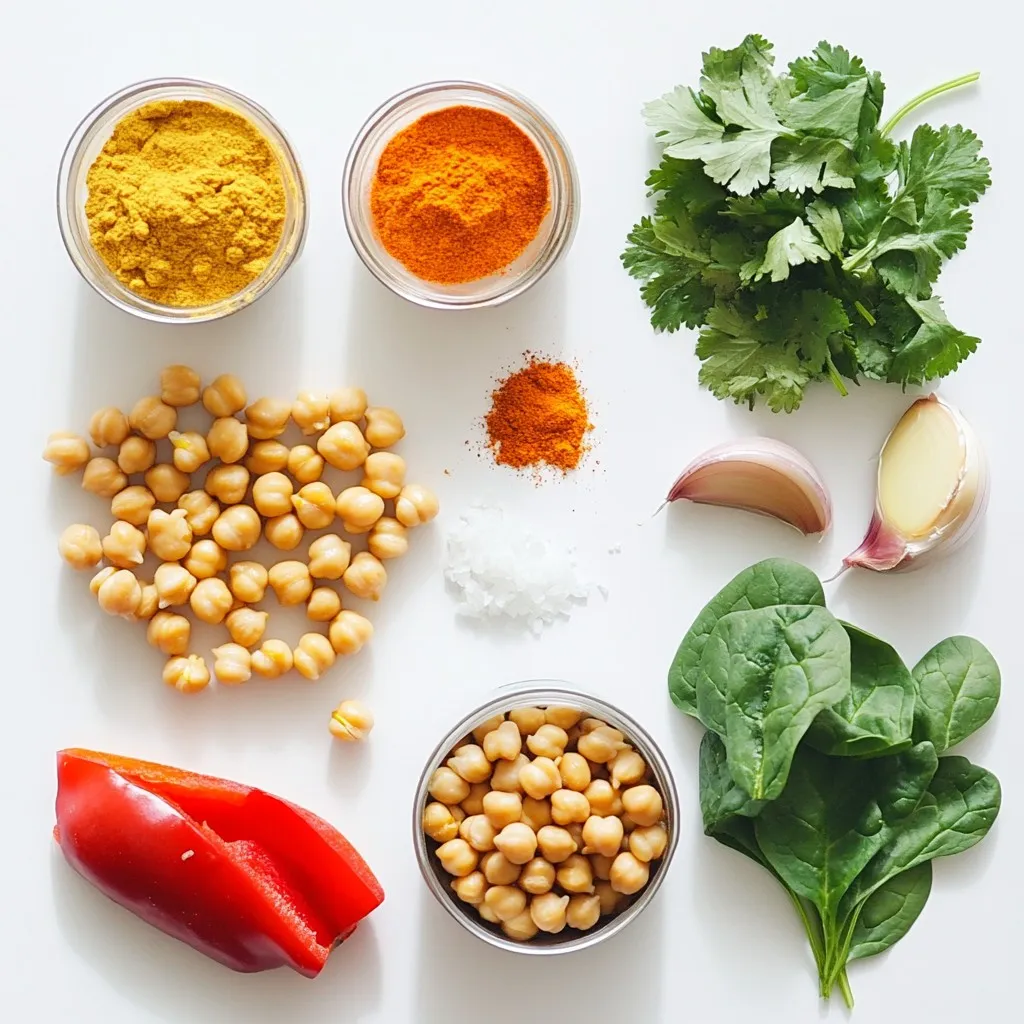
Main ingredients for Chickpea Coconut Curry
– 1 can (15 oz) chickpeas, drained and rinsed
– 1 can (14 oz) coconut milk
– 1 medium onion, finely chopped
– 3 cloves garlic, minced
– 1-inch piece of ginger, finely grated
– 1 red bell pepper, diced
– 1 cup fresh or frozen spinach
– 2 tablespoons olive oil
Chickpeas are the star of this dish. They are rich in protein and fiber. Canned chickpeas save time and still taste great. Coconut milk adds a creamy texture and natural sweetness. You can easily find it in any grocery store.
Fresh vegetables like onion, garlic, and ginger add depth to the flavor. They create a strong base for the curry. The red bell pepper gives a pop of color and crunch. Spinach is nutritious and adds vibrant green to the dish.
Spices and seasonings
– 1 tablespoon curry powder
– 1 teaspoon ground cumin
– 1 teaspoon ground turmeric
– Sea salt and freshly cracked black pepper to taste
Spices are key to making this curry special. Curry powder brings warmth and depth. Ground cumin adds a nutty flavor. Ground turmeric gives a nice golden color. Salt and pepper elevate all the flavors. Adjust them to your taste.
Suggested accompaniments
– Cooked basmati rice or quinoa
– Fresh cilantro, chopped, for garnish
Serving this curry with basmati rice or quinoa makes it a full meal. The rice absorbs the flavors well. Quinoa is a great option for added protein. For a finishing touch, sprinkle fresh cilantro on top. It adds freshness and color.
Step-by-Step Instructions
Preparing the base
1. Heat 2 tablespoons of olive oil in a large pot over medium heat.
2. Add 1 finely chopped onion. Sauté for about 5 minutes. The onion should be soft and slightly golden.
3. Next, stir in 3 minced garlic cloves and 1-inch grated ginger. Sauté for another minute. The aroma will fill your kitchen.
Cooking the chickpeas and vegetables
1. Now, add 1 tablespoon of curry powder, 1 teaspoon of ground cumin, and 1 teaspoon of ground turmeric. Mix well for about 1 minute. This toasts the spices and brings out their flavors.
2. Fold in 1 diced red bell pepper and 1 can of drained and rinsed chickpeas. Make sure everything is coated with the spices.
Simmering and final touches
1. Pour in 1 can of coconut milk and stir until it mixes well. Bring this to a gentle simmer.
2. Reduce the heat slightly and cook for about 10 minutes. This allows the flavors to blend.
3. Add 1 cup of fresh or frozen spinach. Cook for another 2-3 minutes. If using frozen spinach, make sure it is heated through.
4. Season with sea salt and freshly cracked black pepper to taste. Adjust the flavors as needed.
Let the curry sit for a few minutes to thicken before serving.
Tips & Tricks
Perfecting the curry
To make your Chickpea Coconut Curry just right, start by adjusting spice levels. If you like it hot, add more curry powder or a pinch of cayenne pepper. For a milder taste, reduce the curry powder. Taste as you go; this helps you find your perfect balance.
Balancing flavors is key. The creamy coconut milk adds sweetness. You may need to adjust with salt and pepper. A squeeze of lime can add brightness and cut through the richness. Remember, the goal is a rich, harmonious flavor.
Storage tips
Storing leftovers is simple. Let the curry cool down first. Transfer it to an airtight container and place it in the fridge. It can last up to three days. If you want to keep it longer, freeze it in portions. This makes it easy to enjoy later.
For reheating, use a pot on low heat. Stir often to warm it evenly. If it’s too thick, add a splash of water or coconut milk. You can also use a microwave. Heat in short bursts, stirring in between.
Serving suggestions
Presentation can make your dish more appealing. Ladle the curry into deep bowls for a cozy look. Serve it with fluffy basmati rice or quinoa. This adds texture and makes the meal more filling.
Toppings and garnishes can elevate your dish. Fresh cilantro adds a burst of color and flavor. You can also use sliced chili for heat or toasted coconut for crunch. Consider serving with a lime wedge too. It adds freshness and zest.
Pro Tips
- Use fresh spices: Ground spices lose their potency over time. For the best flavor, use fresh spices or toast whole spices before grinding them.
- Adjust the heat: If you prefer your curry spicier, add a pinch of cayenne pepper or a chopped chili pepper when cooking.
- Make it creamy: For an extra creamy curry, stir in a tablespoon of nut butter, such as almond or cashew, just before serving.
- Experiment with veggies: Feel free to add other vegetables like carrots, zucchini, or sweet potatoes to boost nutrition and flavor.
Variations
Additional ingredient options
You can change the vegetables in Chickpea Coconut Curry. Try using zucchini, carrots, or peas. Each veggie adds a unique taste and texture. You can also mix in some mushrooms for an earthy flavor. For added crunch, toss in some chopped green beans.
If you want more protein, consider adding tofu or tempeh. These plant-based options soak up the curry sauce well. Cook them until golden before adding them to the pot. You can also use cooked chicken or shrimp for a non-vegetarian version.
Dietary adjustments
To make this dish vegan, you already have a great base. All the main ingredients are plant-based. Just ensure your curry powder and any extras are vegan-friendly. For a gluten-free option, check that your curry paste has no gluten. Most spices are gluten-free, but it’s good to read labels.
If you’re looking for low-carb alternatives, swap basmati rice with cauliflower rice. This change keeps the dish light while adding flavor. You can also reduce the chickpeas for fewer carbs.
Flavor enhancements
Changing the curry paste can add depth to your dish. Try red or green curry pastes for a different kick. Each paste brings its own special taste and heat level.
Adding citrus can brighten the curry. Squeeze fresh lime or lemon juice just before serving. This touch will lift the flavors and make every bite pop. Lemon zest can also add a fresh aroma.
Storage Info
Proper storage methods
To keep your Chickpea Coconut Curry fresh, you need to store it well.
– Refrigeration tips: After cooking, let the curry cool slightly. Transfer it to an airtight container. Make sure to seal it tightly. Store it in the fridge for up to 4 days. This keeps the flavors locked in and stops bacteria from growing.
– Freezing the curry: If you want to save it for later, freezing works great. Pour the cooled curry into freezer-safe containers. Leave some space at the top, as it will expand. It can last up to 3 months in the freezer. When you’re ready to eat, thaw it in the fridge overnight.
Shelf life
Knowing the shelf life helps you enjoy your curry at its best.
– Best practices for leftovers: Always check your leftovers before eating. If they smell off or look strange, throw them away. For the best taste, try to eat the curry within 3 days of cooking.
– Signs of spoilage: Watch out for changes in color, texture, or smell. If the curry has an unusual odor or if you see mold, it’s time to discard it.
Reheating instructions
Reheating your curry correctly keeps it tasty.
– Best methods to reheat: The microwave is quick but can heat unevenly. Stir it halfway through. You can also use a stove. Place it in a pot over low heat. Stir it often to warm it evenly.
– Maintaining flavor and texture: Add a splash of coconut milk or water if the curry looks thick. This keeps it creamy. Remember to taste and adjust salt after reheating, as flavors can change.
FAQs
What can I serve with Chickpea Coconut Curry?
You can serve Chickpea Coconut Curry with several tasty sides. Here are some ideas:
– Basmati rice: It soaks up the curry’s rich sauce.
– Quinoa: A great gluten-free option that adds protein.
– Naan bread: Perfect for scooping up the curry.
– Roti: A soft, flatbread that pairs well with the dish.
For salads, try serving:
– Cucumber salad: Refreshing and light, it offsets the curry’s warmth.
– Mixed greens: Toss with lemon juice for a zesty bite.
Can I make this curry in advance?
Yes, you can make Chickpea Coconut Curry ahead of time. Here are some tips:
– Meal prep: Cook the curry and let it cool. Store it in an airtight container in the fridge for up to three days.
– Reheating: Warm it on the stove over low heat. Stir gently to avoid burning. You can add a splash of coconut milk to keep it creamy.
How do I make Chickpea Coconut Curry spicier?
To spice up your Chickpea Coconut Curry, try these methods:
– Fresh chili peppers: Add chopped red or green chilies when cooking.
– Cayenne pepper: Stir in a pinch for an extra kick.
– Ginger: Increase the amount for a warmer heat.
Adjust the spice level to your taste. Start small and add more as needed. Enjoy the heat!
Chickpea Coconut Curry is easy to make and packed with flavor. We covered main ingredients like canned chickpeas and coconut milk, along with spices that give it depth. I shared tips for cooking and storing, helping you keep it fresh. Remember, you can customize it with different veggies or spices. Make it your own! Now, enjoy your delicious curry with rice or garnishes. Dive into this dish, and let it bring warmth to your tabl