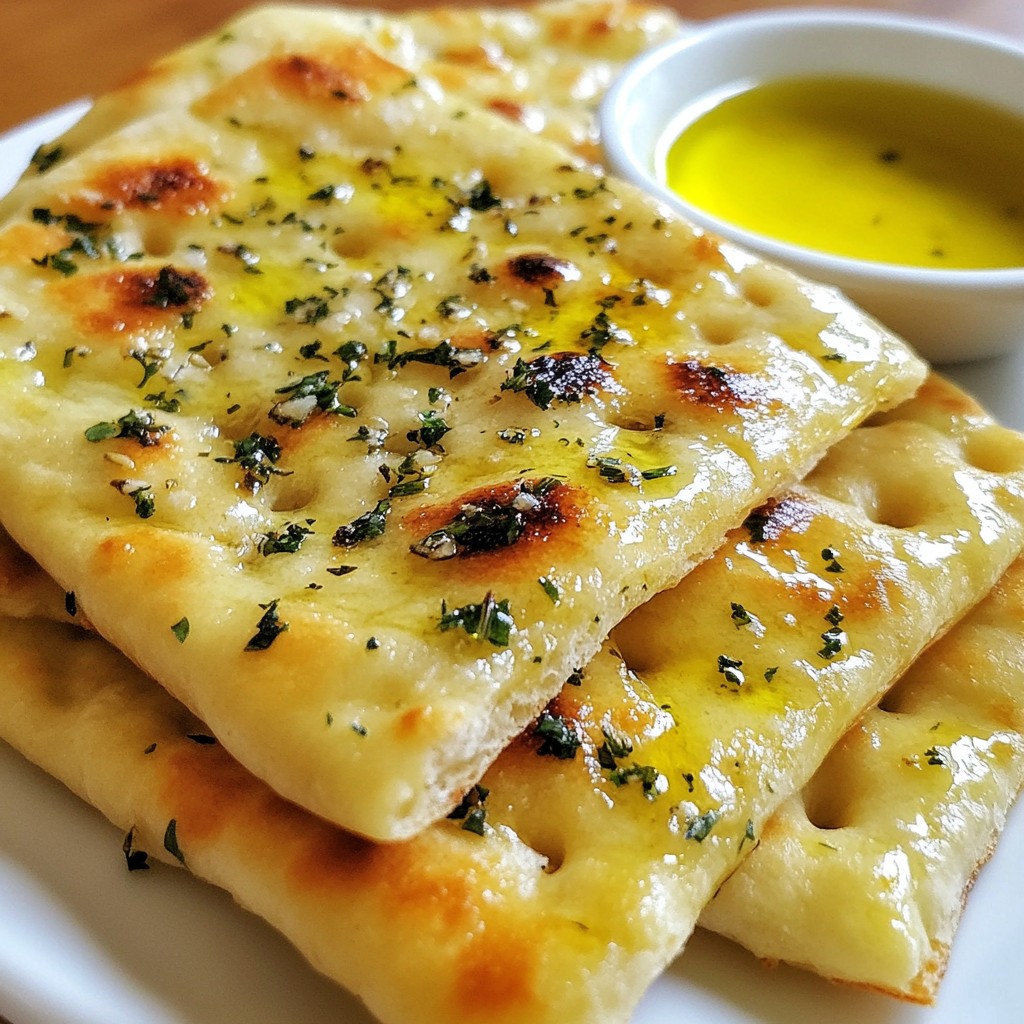
Welcome to your next kitchen adventure! Today, I'm excited to share my Garlic Herb Flatbread recipe. This flatbread is fresh, fluffy, and packed with flavor. You’ll learn how to combine simple ingredients into a delicious dough, top it with a mouthwatering garlic herb mix, and cook it to golden perfection. So, roll up your sleeves, and let’s get started on this tasty journey!
Why I Love This Recipe
- Simple Ingredients: This recipe uses basic pantry staples, making it easy to whip up anytime.
- Versatile Flavor: The combination of garlic and fresh herbs creates a delightful aroma and flavor that elevates any meal.
- Quick to Make: From prep to finish, these flatbreads can be ready in under an hour, perfect for a spontaneous snack or side dish.
- Perfect for Sharing: These warm flatbreads are great for gatherings, allowing everyone to enjoy a delicious, homemade treat together.
Ingredients
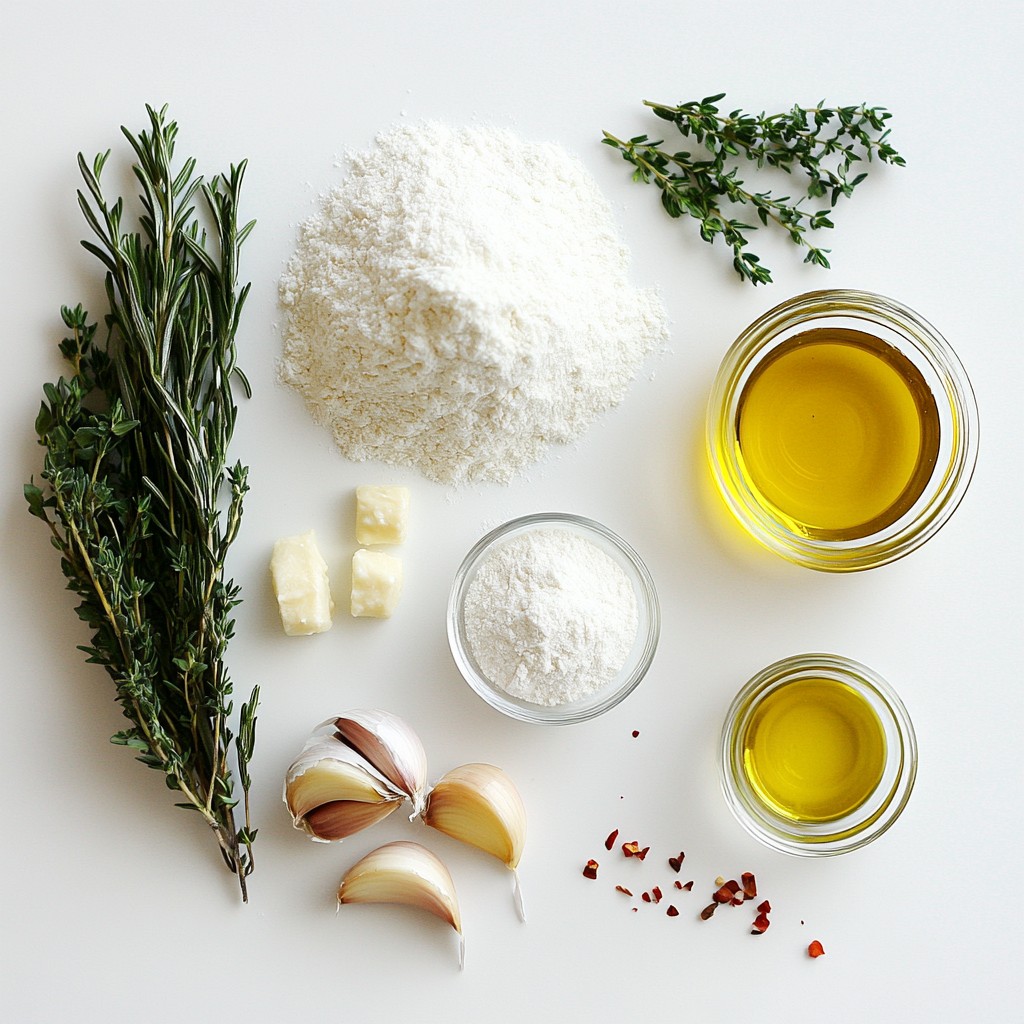
List of Ingredients
- 2 cups all-purpose flour
- 1 teaspoon salt
- 1 teaspoon baking powder
- 1/2 teaspoon baking soda
- 3/4 cup warm water (around 110°F)
- 2 tablespoons extra virgin olive oil
- 4 cloves garlic, finely minced
- 2 tablespoons fresh parsley, finely chopped
- 1 tablespoon fresh rosemary, finely chopped
- 1 tablespoon fresh thyme, finely chopped
- 1/2 teaspoon crushed red pepper flakes (optional for heat)
- Additional olive oil for brushing and cooking
You need simple, fresh ingredients for this garlic herb flatbread. Each item adds flavor and texture. I suggest using fresh herbs for the best taste. If you like a kick, add the crushed red pepper flakes. They give a lovely heat. Otherwise, feel free to skip them.
Using warm water helps the dough rise well. It makes the flatbread soft and fluffy. Extra virgin olive oil adds richness and flavor.
Make sure to have all these ingredients ready before you start cooking. This keeps the process smooth and fun. Enjoy the process of mixing and creating your flatbread from scratch!
Step-by-Step Instructions
Preparation of Dough
To make the dough, first, grab a large mixing bowl. In that bowl, whisk together 2 cups of all-purpose flour, 1 teaspoon of salt, 1 teaspoon of baking powder, and 1/2 teaspoon of baking soda. Make sure these dry ingredients mix well. This helps the bread rise nicely when cooked.
Next, create a well in the center of this dry mix. Pour in 3/4 cup of warm water and 2 tablespoons of extra virgin olive oil. Gently stir with a spatula until it forms a shaggy dough.
Now, it’s time to knead! Transfer the dough to a lightly floured surface. Knead it for about 5 minutes. You want the dough to feel smooth and elastic. Once that’s done, place it back in the bowl. Cover it with a clean kitchen towel and let it rest for 20 minutes. This resting time helps the dough become even fluffier.
Making the Garlic Herb Topping
While the dough rests, let’s prepare the tasty garlic herb topping. In a small bowl, combine 4 finely minced garlic cloves, 2 tablespoons of chopped fresh parsley, 1 tablespoon of chopped fresh rosemary, and 1 tablespoon of chopped fresh thyme. If you like some heat, add 1/2 teaspoon of crushed red pepper flakes. Mix it all well. This mixture will give your flatbread a fresh and aromatic flavor.
Cooking the Flatbread
After the dough rests, divide it into 6 equal parts. On a floured surface, roll each piece into a circle about 1/4 inch thick. It’s important to keep them uniform for even cooking.
Next, heat a skillet or griddle over medium heat. Brush the skillet lightly with olive oil to prevent sticking. Place one rolled flatbread onto the skillet. Cook it for about 2-3 minutes or until bubbles form on top. Flip it over with a spatula and cook for another 1-2 minutes. You want both sides to turn a lovely golden brown.
Once cooked, remove each flatbread from the skillet. Immediately brush it with your garlic herb mixture. This way, the heat will bring out the flavors. Stack the flatbreads on a plate and cover them with a kitchen towel. This keeps them warm and soft until you’re ready to serve.
Tips & Tricks
Common Mistakes to Avoid
To make perfect garlic herb flatbread, focus on dough consistency. The dough should feel soft but not sticky. If it is too dry, add a bit more warm water, one tablespoon at a time. If it feels too wet, sprinkle in a little more flour.
Cooking temperature is key for texture. Preheat your skillet over medium heat. If it’s too hot, the flatbread will burn on the outside and stay raw inside. If it’s too cool, the flatbread will be tough. Aim for a steady medium heat for the best results.
Enhancing Flavor
To boost flavor, try adding more herbs. Oregano, basil, or dill can work well. Fresh herbs give a bright taste. You can also mix in some cheese, like feta or parmesan, for a richer flavor.
Using garlic-infused oil can take your flatbread to the next level. Brush the dough with this oil before cooking. It adds a deeper garlic flavor and enhances the herb mix.
Pro Tips
- Use Fresh Herbs: Fresh herbs elevate the flavor of the flatbread. Substitute dried herbs with fresh ones for a more vibrant taste.
- Adjust Thickness: Roll the flatbreads to your desired thickness; thicker flatbreads will be softer, while thinner ones will be crispier.
- Cooking Temperature: Ensure your skillet is hot enough before adding the flatbreads. A properly heated skillet helps achieve a nice char and prevents sticking.
- Flavor Variations: Experiment with different toppings, such as grated cheese or other herbs, to create unique flavor profiles for your flatbread.
Variations
Gluten-Free Version
To make a gluten-free garlic herb flatbread, you need to swap out the flour. Use a gluten-free all-purpose flour blend. Look for one that has xanthan gum in it. This helps mimic the stretchy texture of wheat flour. You can also try almond flour or chickpea flour. Mix the flour with a little tapioca starch for a better rise. Always check the package instructions for the right water amount since gluten-free flours can vary.
Different Herb Combinations
If you want to change the herbs, there are many options. Instead of parsley, try cilantro or basil. Instead of rosemary, you can use oregano or sage. For thyme, consider using dill or tarragon. You can even try a mix of dried herbs for a unique taste. For a bold flavor, add herbs de Provence or Italian seasoning. Experimenting with flavors allows you to create a flatbread that fits your taste perfectly.
Storage Info
Best Practices for Storing Flatbread
To keep your flatbread fresh, store it in an airtight container. This prevents it from drying out. You can also wrap it in plastic wrap or foil. If you want to keep it longer, consider freezing it.
For freezing, allow the flatbread to cool completely first. Then, stack the flatbreads with parchment paper between each one. This helps to avoid sticking. Place them in a freezer bag. Remove as much air as possible before sealing. This way, they stay fresh for up to three months.
Reheating Instructions
When you're ready to enjoy your flatbread again, reheating is key. You can use a skillet for best results. Heat the skillet over medium heat. Place the flatbread in the skillet for about 1-2 minutes on each side. This keeps it soft and warm.
If you're in a hurry, you can use the microwave. Wrap the flatbread in a damp paper towel. Heat for about 15-20 seconds. This method helps keep the flatbread moist, but it may lose some crispness.
FAQs
How do I know when the flatbread is done cooking?
Look for a few key signs to check if your flatbread is done. First, it should have nice, golden-brown spots on both sides. You may also see bubbles forming on the surface. These bubbles tell you the dough is cooking well. Finally, the flatbread should feel firm but soft to the touch. If it feels too doughy, give it more time in the skillet.
Can I make the dough ahead of time?
Yes, you can make the dough ahead of time. Wrap the unbaked dough in plastic wrap. Place it in the fridge for up to 24 hours. When you're ready to use it, let it sit at room temperature for about 30 minutes. This helps the dough relax before you roll it out. You can also freeze the dough for up to three months. Just remember to thaw it in the fridge overnight before using.
Where can I buy pre-made garlic herb flatbread?
You can find pre-made garlic herb flatbread in many grocery stores. Look in the bakery section or the bread aisle. Some stores may also carry it in the frozen food section. If you prefer online shopping, check websites like Amazon or specialty food stores. Many local bakeries may also offer fresh versions. Just call ahead to ask!
You now have everything to make delicious garlic herb flatbread. We covered measurements for each ingredient, shared clear steps for dough prep, and gave tips to avoid common mistakes. You learned how to enhance flavor and explore variations, like gluten-free options. Plus, we reviewed the best ways to store and reheat your flatbread. Enjoy making this tasty dish at home! With practice, you’ll impress family and friends with your skills. Happy cooking!