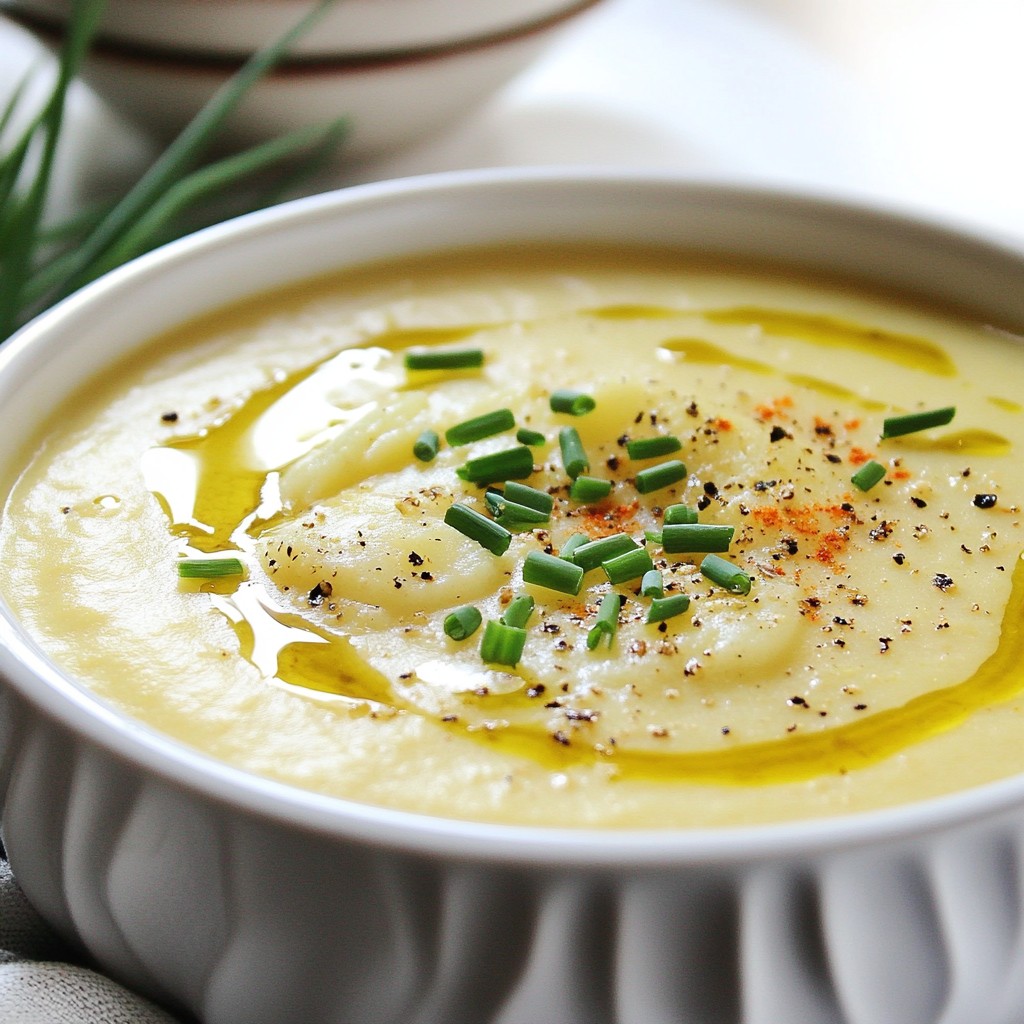
Warm up your day with my Roasted Garlic Potato Soup, a cozy delight you’ll love! This creamy soup combines rich garlic flavors with tender potatoes for the perfect comfort food. Whether you want a simple weeknight meal or something to share with friends, this recipe has got you covered. Let’s explore how to create this tasty dish, as well as tips and variations to make it your own!
Why I Love This Recipe
- Comforting Flavor: This soup is the perfect blend of creamy and savory, making it a comforting dish for any season.
- Simple Ingredients: With just a few basic ingredients, this recipe is easy to prepare without compromising on taste.
- Versatile Options: Substituting heavy cream with coconut milk makes this soup a great dairy-free option for everyone to enjoy.
- Garnish Delight: Fresh chives add a burst of color and flavor, elevating the presentation and taste of the soup.
Ingredients
List of Ingredients
To make this delicious roasted garlic potato soup, you will need:
- 6 large potatoes, peeled and diced into 1-inch cubes
- 1 whole head of garlic
- 1 medium onion, finely chopped
- 4 cups vegetable broth (homemade or store-bought)
- 1 cup heavy cream (or coconut milk for a dairy-free option)
- 3 tablespoons extra-virgin olive oil
- Salt and freshly cracked black pepper to taste
- Fresh chives, finely chopped, for garnish
- 1 teaspoon smoked paprika (optional, for a subtle kick)
Substitutions for Dietary Preferences
You can easily customize this soup for your needs. Here are some ideas:
- For a lighter version, use low-fat milk in place of heavy cream.
- For a vegan option, substitute heavy cream with coconut milk.
- If you need gluten-free, make sure your vegetable broth is gluten-free.
- You can swap potatoes with sweet potatoes for a different flavor.
Nutritional Information per Serving
Each serving of this roasted garlic potato soup offers:
- Calories: 350
- Total Fat: 20g
- Saturated Fat: 10g
- Carbohydrates: 35g
- Fiber: 5g
- Protein: 6g
- Sodium: 600mg
This soup is rich and comforting, perfect for a cozy meal. Plus, it’s packed with flavors and nutrients. Enjoy!
Step-by-Step Instructions
Preparation of Garlic
Start by preheating your oven to 400°F (200°C). Grab a whole head of garlic. Slice off the top to show the cloves. Drizzle one tablespoon of olive oil over the exposed cloves. Wrap the garlic in aluminum foil. Place it in the oven and roast for 30-35 minutes. You want the cloves to be soft, golden, and smell amazing.
Cooking the Onions and Potatoes
While the garlic roasts, heat two tablespoons of olive oil in a large pot over medium heat. Add one finely chopped onion. Stir often until the onion turns soft and clear, about five minutes. Next, add six large, diced potatoes into the pot. Stir well to mix them with the onion. Pour in four cups of vegetable broth, covering the potatoes completely. Turn up the heat until it boils, then lower it to a simmer. Cover the pot and cook for about 20 minutes. The potatoes should be fork-tender when done.
Blending and Final Touches
Once the garlic is ready, take it out of the oven. Let it cool for a moment. Squeeze the soft garlic cloves from their skins into the soup pot. Discard any skins. Use an immersion blender to puree the soup until it's smooth. If you like some texture, blend just half the soup. Stir that back into the pot. Next, add one cup of heavy cream or coconut milk and warm the soup gently. Do not let it boil. Season with salt, black pepper, and smoked paprika if you want some heat. Then, ladle the soup into bowls. Top each bowl with fresh chives for a splash of color and taste.
Tips & Tricks
How to Enhance Flavor
To boost the taste of your roasted garlic potato soup, try adding smoked paprika. This spice gives a warm, smoky note. You can also mix in fresh herbs like thyme or rosemary. These herbs add depth and freshness to the soup. Another great option is to use homemade vegetable broth. It adds a richer flavor than store-bought broth. Lastly, a squeeze of lemon juice at the end brightens the soup nicely.
Ensuring Creaminess
For a thick, creamy texture, use heavy cream or coconut milk. If you want a lighter soup, try milk or a non-dairy milk like almond milk. When blending, you can also leave some potato chunks. This adds texture and creaminess in a fun way. Avoid overheating the soup after adding cream. Too much heat can break down the cream and ruin the texture.
Common Mistakes to Avoid
One common mistake is not roasting the garlic enough. Roasted garlic should be soft and sweet. If the garlic is hard, it will not blend well. Another mistake is skipping the seasoning. Always taste and adjust salt and pepper as you cook. Lastly, don’t blend the soup too long. Over-blending can make it too thin. Aim for a silky, but slightly chunky texture for the best results.
Pro Tips
- Choose the Right Potatoes: For a creamy texture, opt for starchy potatoes like Russets or Yukon Golds, as they break down beautifully in soups.
- Roasting Garlic: Don't rush the roasting process; ensure the garlic is fully caramelized for maximum flavor. It's the secret to a rich and sweet taste in your soup.
- Adjusting Consistency: If the soup is too thick, stir in additional vegetable broth or water until you reach your desired consistency.
- Garnishing Wisely: Fresh herbs like chives or parsley not only add color but enhance the flavor. Consider a drizzle of olive oil for extra richness!
Variations
Dairy-Free Options
If you want a dairy-free soup, use coconut milk instead of heavy cream. Coconut milk adds a light sweetness. It keeps the soup creamy and rich without dairy. You can also try almond milk, but it may change the flavor a bit. Choose a brand without sweeteners for the best taste.
Adding Protein
For a heartier soup, consider adding protein. Chickpeas or white beans work well. They add fiber and make the soup filling. You can also use shredded chicken or turkey. Simply stir it in once the soup is blended. This makes it a complete meal.
Flavor Infusions (Herbs and Spices)
Enhance the soup with herbs and spices. Fresh thyme or rosemary adds a lovely aroma. Add them while cooking the onions for depth. You can also sprinkle in some smoked paprika for a subtle kick. If you like heat, add a pinch of cayenne pepper. A squeeze of lemon juice at the end brightens the flavors, too.
Storage Info
How to Properly Store Leftovers
To store leftovers, let the soup cool down. Transfer it into a clean, airtight container. Store it in the fridge for up to five days. Make sure the lid seals tightly to keep out air. This helps maintain flavor and texture.
Reheating Instructions
When you're ready to enjoy your soup again, pour it into a pot. Heat it over medium-low heat, stirring often. This prevents it from sticking to the bottom. If it seems too thick, add a splash of broth or water. You want it hot but not boiling to keep the cream smooth.
Freezing Recommendations
You can freeze this soup for longer storage. Let it cool completely, then place it in a freezer-safe container. Leave a bit of space at the top, as soup expands when frozen. It can stay good for up to three months. When you want to eat it, thaw it overnight in the fridge before reheating. This keeps the flavors fresh and tasty.
FAQs
Can I use other types of potatoes?
Yes, you can use different types of potatoes. Russet potatoes give a fluffy texture. Yukon Gold potatoes add a creamy taste. Red potatoes hold their shape well. Each type brings a unique flavor and texture.
How can I make this soup spicier?
To add spice, you can try a few methods. First, add more smoked paprika. This gives a warm flavor. You can also add crushed red pepper flakes. If you like heat, try diced jalapeños or cayenne pepper. Start small, then taste and adjust.
Can I make Roasted Garlic Potato Soup ahead of time?
Absolutely! This soup tastes even better the next day. Make it, then cool it quickly. Store it in an airtight container in the fridge. Reheat gently on the stove. Stir well and enjoy that fresh flavor again!
We covered the key ingredients for Roasted Garlic Potato Soup, along with substitutions for dietary needs. You learned about each step, from preparation to blending. I shared tips to boost flavor and avoid common mistakes, plus variations for added nutrition. Finally, I explained how to store leftovers and answer common questions.
This soup is easy to make and full of flavor. I hope you try this recipe and enjoy it!